Next.js Gives Full-Stack Development a More Coherent Shape
by Halil, Web, Mobile & App Specialist
Next.js Gives Full-Stack Development a More Coherent Shape
Next.js feels significant because the architecture is starting to match the way modern web applications are actually built. For years, teams have had to piece full-stack systems together from layers that often felt only loosely connected. The UI followed one model, data fetching followed another, and mutations, caching, and revalidation usually introduced even more separation. Even when each part was reasonable on its own, the overall system could still feel fragmented.
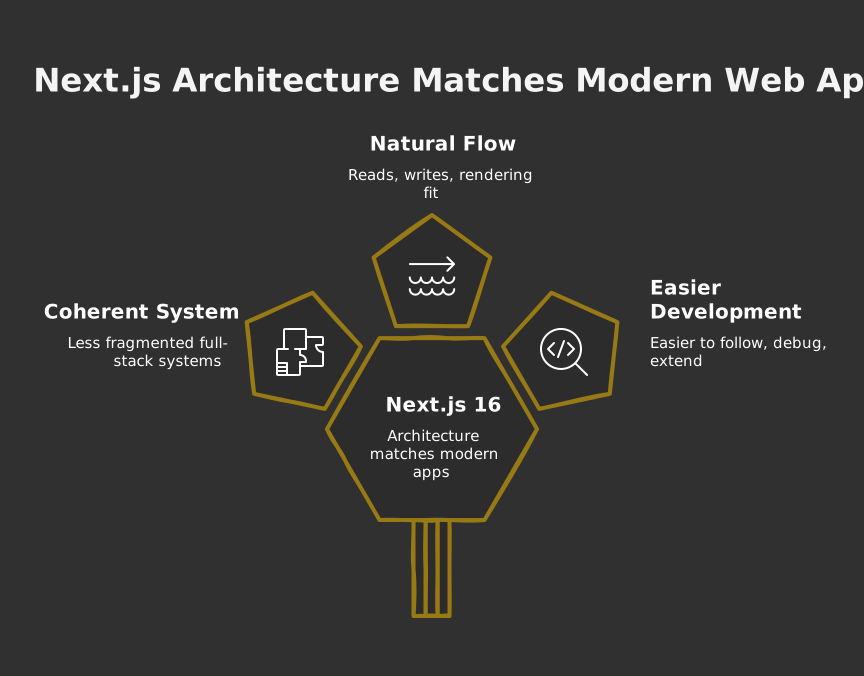
Next.js reduces that fragmentation in a meaningful way.
With the App Router, Server Components, Server Actions, streaming, and a more deliberate caching model, the framework offers a structure where reads, writes, rendering, and revalidation fit together much more naturally. That changes the day-to-day development experience because the system becomes easier to follow, easier to debug, and easier to extend without constantly translating intent across layers.
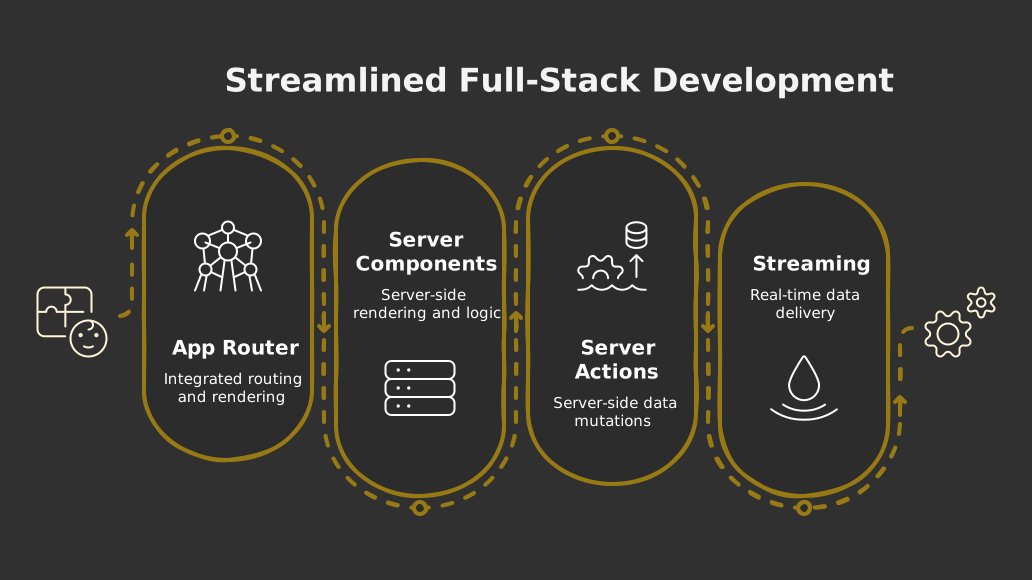
Server Actions remove a lot of unnecessary ceremony
Many frontend workflows have become more elaborate than the underlying task really justifies.
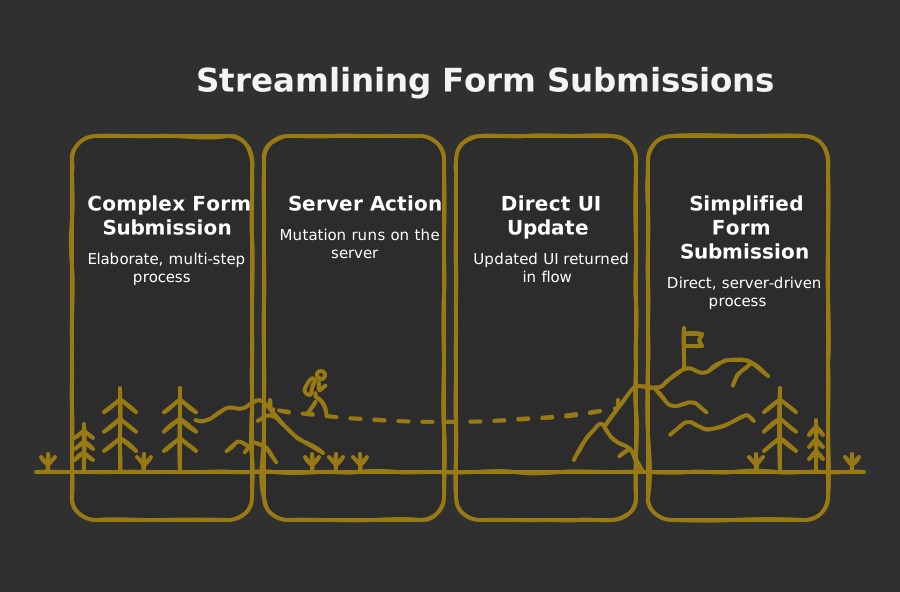
A simple form submission is a good example. A user enters data in the browser, the client prepares a request, an API route receives it, the server validates the payload, writes to the database, returns a response, and then the client has to decide how to reconcile the result with local state or cached data. Once retries, optimistic updates, and error handling get layered in, the surrounding code often grows faster than the feature itself.
Server Actions make that path much more direct. The mutation runs on the server, where the real authority already lives, and the updated UI can be returned within the same application flow. That means fewer moving parts, fewer custom abstractions, and far less glue code whose only purpose is keeping the system in sync.
In practice, that simplification matters. Teams spend less time wiring transport logic, duplicating validation, and cleaning up state mismatches. The codebase becomes easier to reason about because the mutation logic stays closer to the place where trust and business rules already belong.
The trust boundary gets cleaner
Server Actions also improve the shape of the application as a whole.
When writes happen on the server, sensitive logic stays there too. Database access, permission checks, internal workflows, secret-backed integrations, and business rules can remain inside the trusted boundary of the app instead of being exposed through extra public surface area. Teams still need proper authentication, authorization, validation, and auditing, but the default structure becomes much healthier.
That matters more than it may seem at first. A surprising amount of frontend complexity begins when trust leaks into the wrong layer and every feature starts carrying extra coordination cost. Keeping those boundaries clear tends to improve the entire codebase, not just the mutation path.

The rendering model is where the framework starts to feel mature
The bigger story in Next.js is how Server Actions fit into the rendering model.
Real applications are mixed by nature. A dashboard may include a stable layout, a few cached summary cards, and several user-specific sections that need fresh data. A commerce page may combine durable marketing content with fast-changing inventory and region-aware pricing. An internal tool may rely heavily on server-side data in one section while using lightweight client interactivity in another.
That kind of page structure has always been common, but frameworks have not always modeled it well.
Next.js handles it better because the rendering model is more granular. A route no longer has to behave like one monolithic unit. Different parts of the tree can take on different runtime characteristics depending on what they actually need. Some sections can stay static, others can be cached, and others can remain fully dynamic. That gives teams far more control without forcing broad architectural decisions across an entire page just because one section needs fresh data.
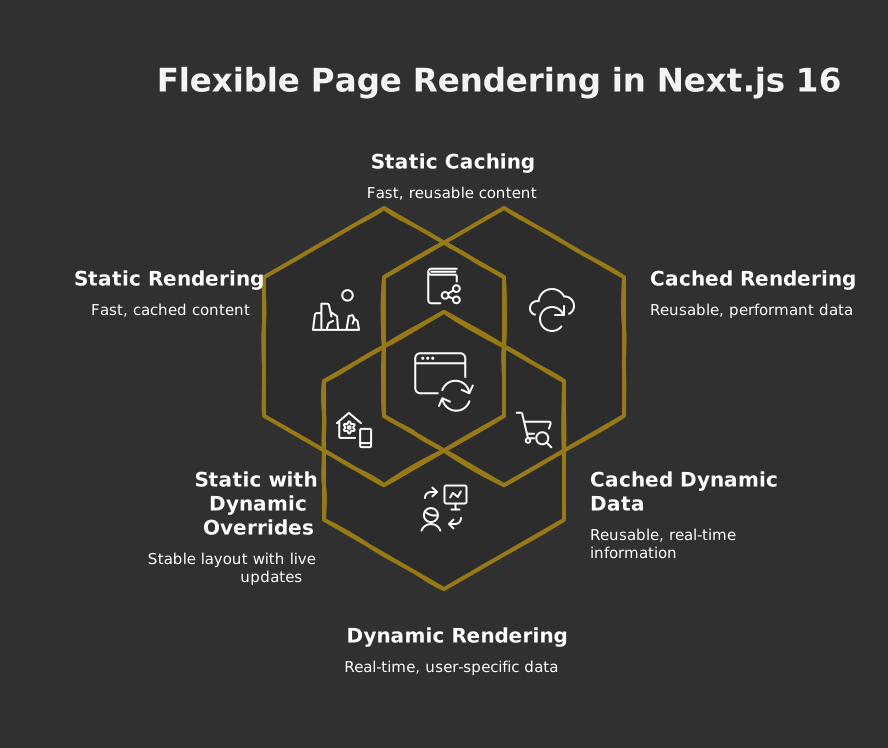
This is one of the clearest signs that the framework is maturing. The model is starting to reflect the real shape of production applications rather than forcing developers into categories that are too broad to be useful.
Performance improves when work stays in the right place
The performance benefits in Next.js come from better placement of work throughout the stack.
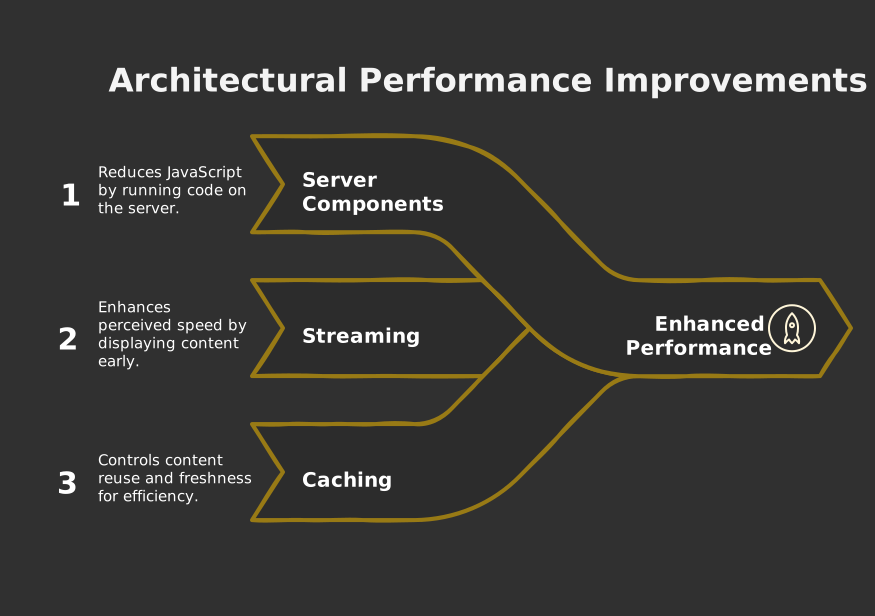
Server Components reduce the amount of JavaScript sent to the browser because code that only needs to run on the server never becomes part of the client bundle. In large applications, that can make a meaningful difference in load performance, parse time, and general responsiveness. Streaming improves perceived speed because users can start seeing useful parts of the interface earlier instead of waiting for the entire route to resolve. Caching adds another layer of leverage by giving teams direct control over what should be reused, what needs freshness, and when revalidation should happen.
Taken together, those capabilities make performance feel architectural instead of incidental. The system becomes faster because the framework makes it easier to put work where it belongs, not because the team has to bolt on a series of late-stage optimizations.
The biggest improvement is the mental model
The strongest part of this direction is the reduction in conceptual overhead.
A lot of engineering friction comes from juggling several overlapping models of how the application works. One model explains the UI, another explains the fetch layer, another handles mutations, another explains cache invalidation, and another tries to explain how all of that interacts during rendering. Once those systems drift apart, teams spend more time coordinating boundaries than building product.
Next.js narrows that gap. Data fetching can live close to the server-rendered UI that depends on it, mutations can happen inside the same application model instead of crossing a custom API seam, and revalidation can connect more directly to rendering behavior. As a result, developers spend less time translating intent across layers because the layers themselves are more tightly integrated from the start.
That makes the code easier to understand, easier to debug, and easier to evolve. It also reduces the need for homegrown abstractions whose main purpose is compensating for architectural fragmentation.
What good practice looks like in Next.js
The most effective approach today is fairly straightforward.
A server-first mindset usually leads to the best results. Fetch data on the server when possible, keep secrets and business logic on the server, use Server Actions for meaningful mutations, keep the client surface area intentionally small, and treat caching and revalidation as part of the application design from the beginning.
That approach avoids many common failure modes. Client bundles stay smaller, fewer endpoints need to be maintained, state duplication becomes easier to avoid, and data flow remains easier to follow as the application grows. These are the kinds of improvements that hold up well in a real codebase because they reduce systemic complexity rather than just hiding it.

Why this matters beyond one release
Next.js points to a broader shift in web architecture.
For years, the industry leaned heavily into client-centric application design, which brought useful ideas along with larger bundles, duplicated logic, API sprawl, and constant effort spent keeping client and server state aligned. The next phase of full-stack development is becoming more balanced and more deliberate about where different kinds of work should live.
That is why this release stands out.
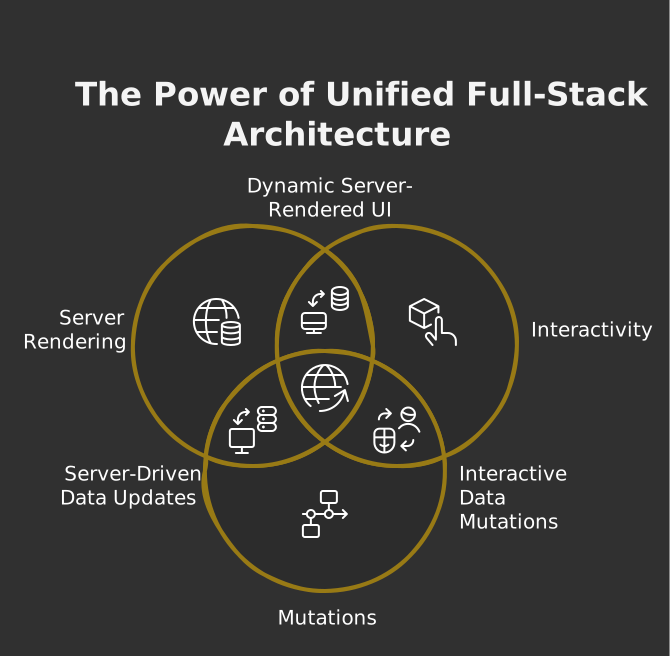
It supports a model where server rendering, interactivity, mutations, streaming, and caching can exist inside the same architecture without pulling the application apart. The framework feels closer to the real shape of production software, and that is usually a sign that the underlying model is getting stronger.
Next.js gives teams a clearer way to build applications that stay fast, maintainable, and understandable as they grow.